
Rodent Recognition: Is it a Mouse or a Rat?
Why Correct Identification is Key to Effective Control
It’s late at night, and suddenly, a small, furry critter runs across your kitchen floor. Eek! Rodents are no joke; they cause damage to your home and spread diseases such as hantavirus.
With winter approaching, mice and rats become increasingly motivated to escape the cold. Your home provides everything they’re after: warmth, food, and a quiet place to nest. That’s why winter is peak season for rodent activity, making prevention crucial before small problems become full-blown infestations.
Look for these general signs of rodent activity:
- Droppings around food packages, inside cabinets, or under sinks
- Shredded paper, fabric, or other nesting materials
- Holes chewed in food packaging
- Distinctive gnaw marks on walls, furniture, or baseboards
- Oily rub marks “sebum” on walls, plumbing and electrical paths
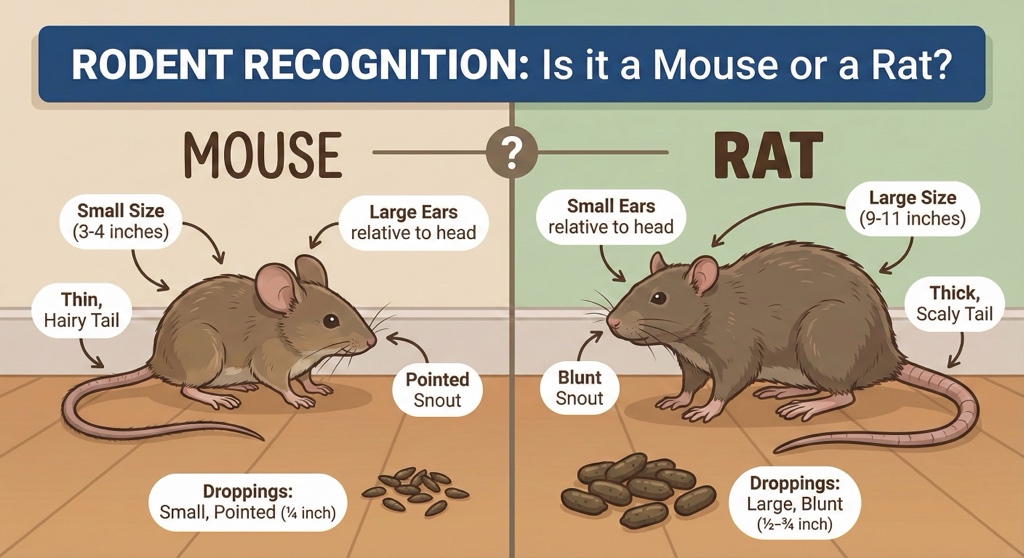
Before you begin rodent-proofing your home, it’s important to confirm which rodent you’re dealing with. Mice and rats share many similarities, but their differences can impact both treatment and prevention.
Mouse Characteristics
- Size: Small, slender bodies
- Tail: Long and thin, covered in fine hair
- Ears: Large in proportion to the head
- Snout: Triangular-shaped
- Droppings: Small and pointed at both ends
- Behavior: Agile climbers; often nest in walls, attics, and cabinets
- Common Types in Texas:
- House Mouse – small and dusty gray, they thrive indoors
- Deer Mouse – brown with a distinct white belly, they prefer outdoor structures
Rat Characteristics
- Size: Larger and heavier than mice
- Tail: Thick, hairless, and more pronounced
- Ears: Smaller relative to head size
- Snout: Blunt or rounded
- Droppings: Larger, more rounded, often banana-shaped
- Behavior: Tend to be more cautious than mice; gnaw larger openings and cause greater damage
- Common Types in Texas:
- Roof Rats – slender, excellent climbers, often found in attics or upper levels
- Norway Rats – stockier and prone to burrowing, often found in basements or lower levels
Rodent Prevention
Once you’ve determined which type of rodent is present, take proactive steps to reduce further infestations.
Seal Entry Points
- Mice can fit through holes the size of a dime, rats through a quarter
- Inspect areas such as:
- Inside and under cabinets
- Around windows and doors
- Behind appliances
- Attics, roofs, and crawl spaces
- Foundation gaps and utility openings
- Use caulk or steel wool to seal entry points

Eliminate Food & Water Sources
- Clean up spills and crumbs promptly
- Store food and pet food in sealed containers
- Remove outdoor food sources like:
- Bird or squirrel feeders
- Open compost bins
- Fallen fruit
- Pet feces
- Garbage or unsecured trash cans
Remove Shelter Opportunities
- Clear away leaf piles, wood stacks, and clutter around the yard
- Keep storage areas tidy and avoid stacking boxes directly against walls
Call Angel Pest Control
If you are still struggling with rodents after following the above tips, don’t hesitate to reach out to a professional.
Here at Angel Pest Control, we offer rodent services on a monthly, bi-monthly, or quarterly basis – tailored to your specific home. We also offer exclusions, which consists of sealing up any rodent access points around your home.
If you’d like to book a free estimate, give us a call at (830) 379-3277 and we will help keep your home rodent free.